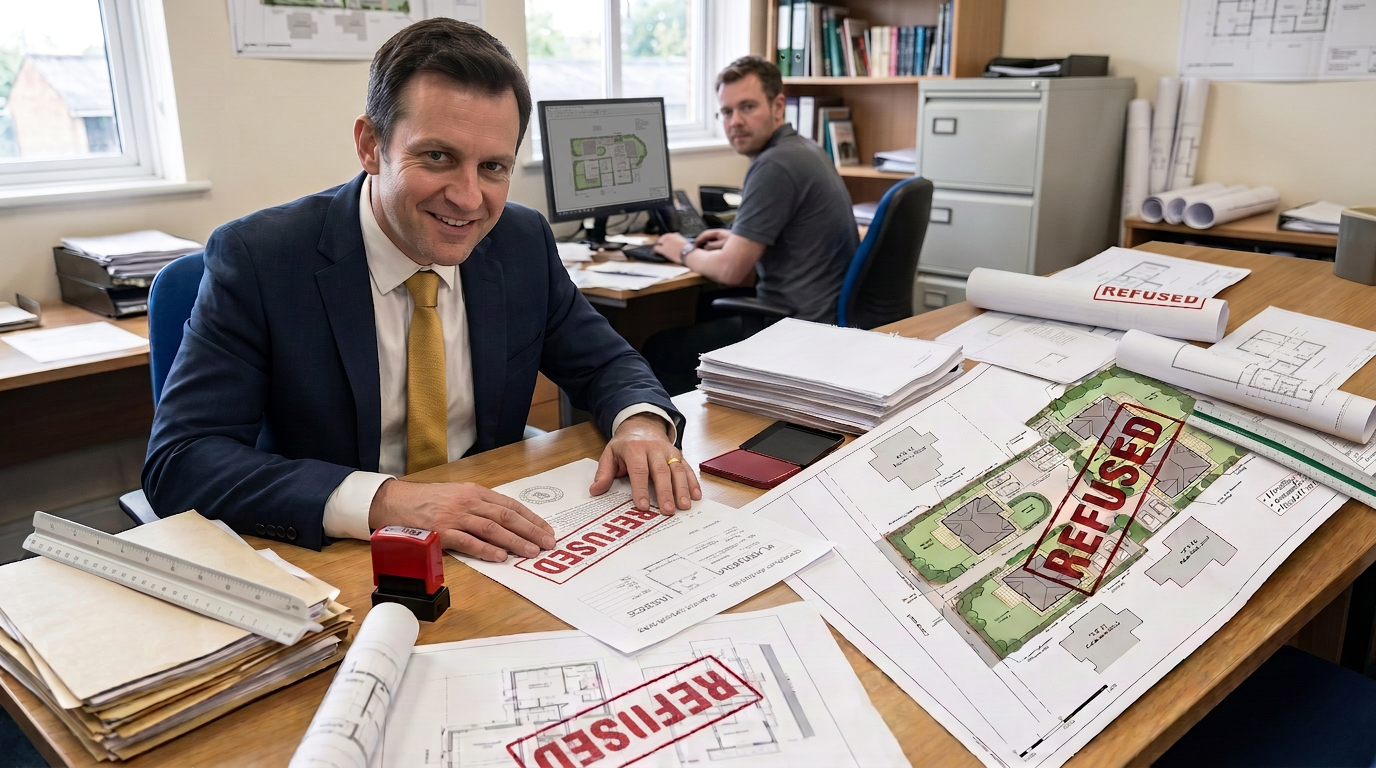
Planning Refusal Notice reviewed by architect
One of the questions we regularly get asked by architects and developers is what to do after a planning refusal.
A refusal does not automatically mean that your architect or planning adviser has done something wrong. Planning decisions involve judgment, and sometimes the council reaches a different view from the applicant and their advisers. The important thing is to understand why the application was refused and what that means for the project.
The obvious answer might seem to be an appeal. But an appeal is not always the route that is best for the client or the site. The important question is not simply whether the council got its decision right. It is which route is most likely to achieve the client’s desired outcome.
Appeal or Revise?
As Chartered Town Planners, we have a duty to act in our clients’ best interests and apply our professional judgment to the planning merits. That shapes the questions we ask when we first meet a client. Rather than simply asking what they want us to do, we ask what they want to achieve.
An appeal may be the right route where the decision can be challenged on the plans and evidence already before the council. For applications made on or after 1 April 2026, the new written-representations procedure limits the opportunity to introduce new evidence or arguments after the decision. If the case depends on new technical evidence or a significant change to the proposal, a fresh application may be more appropriate.
A revised application gives us the opportunity to respond directly to the reasons for refusal. That might mean changing the design, providing further evidence or setting out the planning case more clearly. It does not guarantee permission, and there may be further application and professional costs. The question is whether those changes offer a better prospect of securing permission.
Planning refusal – what do we look for?
The decision notice and officer report are the starting point. Why was the application refused? What concerns did the planning officer raise? We also look at the consultee responses. Sometimes they reveal a disconnect between the advice given during consultation and the decision the council ultimately took.
Refusals on design, character or appearance can be among the hardest to assess. These issues are sometimes treated as subjective, but planning judgment is not simply a matter of taste. The decision should explain how the proposal relates to its surroundings and the relevant policies. Whether there is a sound basis to challenge that judgment depends on the evidence and the case made.
Our advice is not a sales pitch
We do not advise clients to appeal when a revised application is the better route. We do not advise clients to reapply when an appeal is the better route.
Our advice is based on the merits of the case and the client’s desired outcome. We consider what each route involves, what it is likely to cost the applicant and which offers the sounder prospect of securing permission. Then we recommend the route we believe is right.
If the evidence and planning judgment point to a revised application, we say so. We do not recommend an appeal we do not believe in simply to take on further work later.
That is what acting in a client’s best interests means.
What now?
A refusal is a decision point. It does not automatically mean appeal, and it does not automatically mean reapplication.
We review the reasons for refusal, the officer’s report, the consultee responses and the application itself. Then we tell you which route we recommend and why. If an appeal is right, we say so. If a revised application is right, we say that instead.
You get a clear recommendation based on your case, with the likely costs and next steps explained. No appeal for the sake of an appeal. No resubmission for the sake of another fee.
If you have received a refusal, send us the decision notice and officer report. We will assess the options and give you a straight answer.